Hair Restoration · Doctor-Led Care
Hair loss doesn't always mean you need a hair transplant. At CFH, we first understand your hair loss, scalp condition, donor area and goals. Then our doctors recommend whether hair transplant surgery, another treatment, or simply a different approach is right for you.
Hair loss can have different causes, stages and patterns. A transplant may be appropriate for some patients, while others may benefit from non-surgical treatment or medical management first. That's why CFH doesn't recommend a procedure simply because you asked for one.
Understand Your Hair Loss“Why are you losing your hair?”We understand first. Then we recommend.
Every treatment begins with understanding, not assumptions. The CFH S.U.R.E.™ Method is our doctor-led approach to understanding your condition before recommending what's right for you.
“We don’t recommend treatments because we offer them.We recommend them because they’re right for you.“
We examine your scalp, hair density, pattern of loss and donor area to understand what we're working with.
Your hair history, lifestyle, medical factors and pattern of hair loss all matter.
If transplant is appropriate, we'll explain why. If another treatment makes more sense, we'll tell you that instead.
Your progress matters after treatment too. We monitor your recovery and response so your plan can evolve when necessary.
Making the right decision is just as important as getting the right treatment.
A transplant generally requires enough healthy donor hair and an area where transplanted follicles can grow. The underlying cause and pattern of hair loss also matter. A doctor may assess:
Hair loss may sometimes be managed with non-surgical or medical approaches depending on the cause and diagnosis.
The focus may shift toward preserving existing hair while assessing whether restoration procedures could help.
For suitable patients with sufficient donor hair, hair transplantation may become an option.
The stage alone doesn’t decide your treatment.Your diagnosis does.
Tell us what you're experiencing, what you've tried and what you want to achieve.
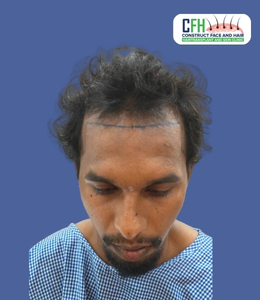
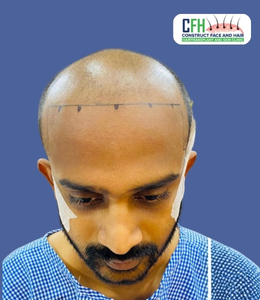
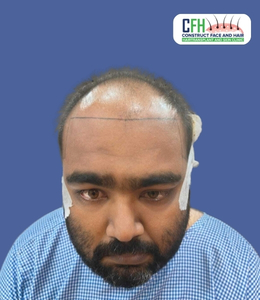
Your doctor evaluates your hair loss pattern, scalp and donor area.
If transplant is appropriate, your doctor explains the recommended approach and why.
The plan considers your existing hair, donor supply and long-term appearance.
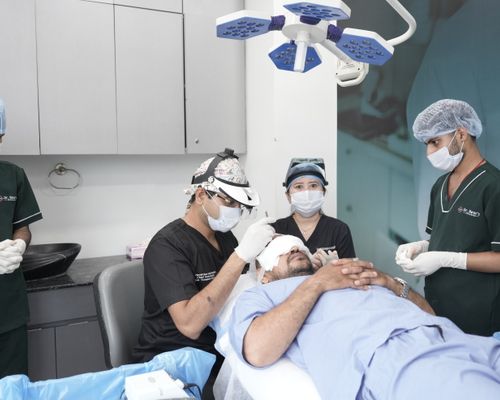
The selected technique is performed with appropriate clinical and safety protocols.
You'll receive aftercare guidance and progress monitoring throughout your recovery.
Different techniques can be discussed as part of your treatment plan.
Individual follicular units are extracted from the donor area and transplanted into the recipient area.
A method of implantation designed to give the surgeon control over placement and direction of transplanted follicles.
A variation involving sapphire blades for creating recipient sites.
There is no “best technique” for everyone.The right technique depends on your hair loss, donor area, goals and clinical assessment.
A hair transplant isn't simply about moving grafts from one place to another. The planning of the following can influence how natural the result looks:
Every recommendation at CFH is backed by qualified, experienced specialists.
The team explained everything clearly before recommending surgery, and only after a proper scalp assessment.
— Aravind, ChennaiI appreciated that they discussed non-surgical options first instead of pushing me straight into a transplant.
— Karthik, CoimbatoreProfessional team, honest about timelines, and follow-up care has been consistent.
— Vignesh, BangaloreA transplant isn't an overnight transformation. After surgery, transplanted hairs may temporarily shed before new growth begins.
Your timeline can vary depending on individual factors and the treatment plan recommended by your doctor.
A consultation should cover:
We want you to understand the decision before you make it.
Download the free guide: The Hair Transplant Decision Guide.
Understand. Assess. Decide With Confidence.
Can’t find what you’re looking for? Book a free consultation with our doctors.
No. Suitability depends on your donor hair availability, scalp condition, pattern of hair loss and overall health, which is why a doctor-led assessment comes first.
A consultation and scalp assessment is the only reliable way to know. Your doctor will evaluate your hair loss pattern, donor supply and goals before recommending anything.
There is no single ideal age. Doctors often consider whether your hair loss pattern has stabilised enough to plan a durable, natural-looking result.
In some cases, yes. Non-surgical options such as GFC, PRP or medical management may be considered first, depending on the cause and stage.
Existing non-transplanted hair can continue to thin over time. This is why long-term planning and follow-up care are part of your treatment plan from the start.
Initial recovery is generally within a couple of weeks, though this varies by individual. Your doctor will provide aftercare guidance specific to your procedure.
Early growth can appear around the fourth month, while fuller results generally take considerably longer and vary between patients — often 9–12 months or more.
Neither is universally ‘better.’ The right technique depends on your hair loss, donor area, goals and clinical assessment.
Sapphire is a variation of FUE that uses sapphire blades to create recipient sites. Your doctor can explain which approach may suit your case.
The procedure is typically performed under local anaesthesia, and most patients report manageable discomfort. Your doctor will discuss what to expect.
Cost depends on the technique, number of grafts and your individual treatment plan. Your doctor can provide a personalised estimate after your assessment.
Transplanted hair is generally intended to be permanent, though individual results and long-term hair health can vary and should be discussed with your doctor.
Ask about your specific diagnosis, why a technique is recommended for you, expected timelines, risks, and what happens if your hair loss continues after the procedure.
These answers are general information and not a substitute for a doctor's assessment.
Be SURE. Before You Do It.
Let our experts evaluate your condition and recommend what's truly right for you.